
Skip to content
August Brooks
August Brooks, portrait

Systems Architect · Software Developer · Innovator · Author

August Brooks

Systems architect and autodidact. I build the kind of infrastructure that most companies assemble a department to attempt — autonomous trading systems, multi-model AI orchestration, cited-evidence engines — alone, from first principles, with no degree and no funding round.

Five ventures. Five books. One operator.
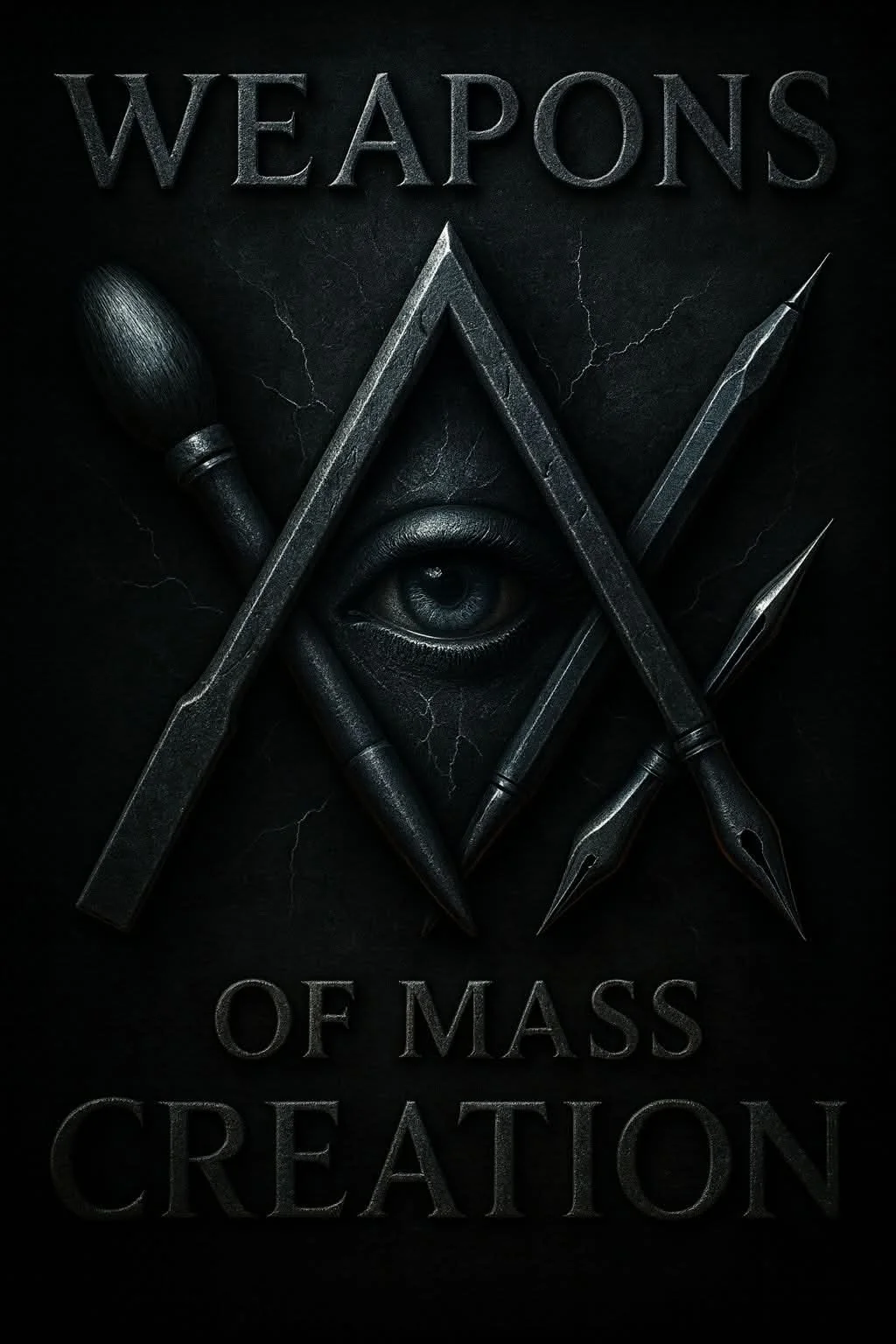
Weapons of Mass Creation — carved slate artwork: crossed pens, brush and chisel around an eye
Weapons of Mass Creation
Books published
5
Ventures operating
5
Years in sales
20
Navy veteran
USN
01Ventures

What I run.

  • Platform / AI

    Xyntherium

    Every major AI model is confidently wrong in a different direction. Xyntherium is built on the observation that this is not a defect to be tolerated but a signal to be harvested. A single prompt is routed simultaneously through Claude, GPT, Grok, Gemini, Perplexity, and DeepSeek, and their independent answers are put in front of a Prompt Angel oversight layer that identifies where they converge, where they diverge, and why — then synthesizes a single cross-validated response with the disagreement made visible rather than hidden.

    The result is an answer with a confidence structure attached. When six independently trained systems reach the same conclusion by different routes, that agreement is evidence. When they split, the split itself is the most useful thing on the screen — it marks the exact place where a single-model answer would have been a coin flip presented as a fact. Xyntherium turns the industry's fragmentation into its own quality control layer.

    xyntherium.com(opens in a new tab)
  • Quantitative / Trading

    Dark Matter X

    An autonomous trading system built to operate without a human in the loop — not a signal service or a set of alerts, but a full stack that reads market state, selects a strategy posture, sizes positions, manages exits, and enforces its own risk floor. The architecture runs as a set of specialized agents under a single structural authority called OVERWATCH, which may reject a trade for exactly seven enumerated structural reasons and never on a subjective quality judgment. That constraint is deliberate and absolute: no intelligence layer in the system is permitted to become a gate.

    Underneath it sits original signal research — BEDD, a Behavioral Entropy Divergence Detector, and SPA, a State Parity Audit, both filed as provisional patents and therefore patent pending. The engineering discipline is borrowed from the firehouse rather than from fintech: strategies are not promoted on backtest enthusiasm but survive a validation gauntlet against survivorship-free data, and “done” means observed running in production, not passing in a notebook.

    BEDD
    Behavioral Entropy Divergence Detector · patent pending
    SPA
    State Parity Audit · patent pending

    No public site yet

  • Consumer / Data

    Food Court

    A food label intelligence engine built on a constitutional constraint: it may count, organize, compare, and summarize cited findings, and it may never infer, diagnose, predict, or assert more than the record supports. Its voice rule is written into the system — as harsh as the worst cited finding allows, and not one degree harsher. Scan a barcode or photograph a panel and Food Court returns not a wellness score but a set of independent evidentiary rails: cited harm findings on individual ingredients, NOVA processing classification, FDA daily-value thresholds, the brand's own regulatory and enforcement record, laboratory contaminant results measured on finished products, and composition by weight.

    The thesis is that listing ingredient names has no value — anyone can read a label. The value is telling a person what each substance is documented to do to them, with the source attached and clickable. A parent reading “TBHQ (preservative)” learns nothing. Food Court exists to close that gap, and it deliberately refuses the one thing every competitor does: it will not compress the evidence into a single letter grade, because a grade is an assertion the record cannot support.

    foodcourt.health(opens in a new tab)
  • Publishing

    CodexBlakk Publishing

    An independent publishing house built to carry work that traditional houses would ask to soften. CodexBlakk publishes the Freedom Plantation trilogy, The Sovereign Mind, and The Brooks Method — fiction and framework, all of it circling the same subject: the invisible architecture people live inside, and what it costs to see it clearly. Every title is written, edited, designed, typeset, and produced in-house, to a locked typographic standard, without a committee deciding what the reader can handle.

    codexblakk.com(opens in a new tab)
  • Agency

    True Level Marketing

    The applied edge of everything else. True Level builds custom sites for small businesses — contractors, restaurants, shops — at a price that undercuts the overwhelming majority of the market, because the production pipeline behind it is automated to a degree the industry has not caught up with. Every build gets a cinematic opening, the business's real photography and real reviews rather than stock filler, and a genuine custom wordmark instead of a template logo. What agencies quote at five figures and six weeks, True Level ships for a flat monthly rate.

    truelevelmarketing.com(opens in a new tab)
02Books

What I've written.

The Freedom Plantation

You were taught to be free. You were designed to be owned.

  • Book One

    The Freedom Plantation

    1863, a plantation on the Ashley River above Charleston, the Confederacy losing. A nameless man dressed as a banker stands on the upper veranda and teaches the owner the instruments that will outlast the war: debt first, then belief. He is known only by a title, an initial, a notation in a margin. He is not inventing anything. He knows the mechanisms predate the nation and will outlive it — that chains become debt, guards become credit agencies, and the overseer becomes the HR department.

    The novel braids that scene with the present day: a seven-hour podcast conversation in which a man named Gary Tate explains the architecture to an audience of millions, and an ordinary man named Marcus Webb who hears it and cannot un-hear it. The front matter states the frame plainly — the architecture is real, the characters are not — and the book refuses to end in despair. It ends in a garden, with a man planting a four-by-eight bed his grandfather would have recognized, and a phone ringing at 8:14 to begin the cycle again.

    Purchase link coming soon

  • Book Two

    A Design by None

    Book One asked whether the system was built. Book Two answers: nobody built it. The architecture is real and it is authorless — no room, no meeting, no signature, just competent people teaching the same four things to whoever happens to be standing there. That is a far more disturbing proposition than a conspiracy, and this book is built to make the reader sit inside it.

    Its engine is a question with no safe answer. Gary Tate has been right for nineteen years, and it has hollowed him out — he can no longer listen to a person speak for four minutes without the content becoming inaudible beneath the structure. Somewhere in the same country is a man who kept index cards for nineteen years and was also right more often than wrong, and who at four in the morning wonders whether nineteen years of being right is a career or a symptom. They never meet. Neither can establish which of them is the seer and which is the patient.

    The novel moves through functionaries who are kind, ordinary, and horrifying — the engineer who removes four seconds of load time and later finds his own work at the top of the list of things capturing his daughter's attention — and lands somewhere very few books about systems are willing to land: right, decent, and failed, and finally able to be still.

    Purchase link coming soon

  • Book Three

    A Machine Called God

    The terminal escalation. If Book One is the design and Book Two is what it costs to know, Book Three is the question of who you are afterward — and what the architecture does when a man stops shouting.

    The machine has never needed to silence its critics. It permits them, because a man permitted to shout will shout, and go home lighter, and nothing will have been carried at all. The one it cannot permit is the one who stops arguing and starts practicing. This book follows a man from Austin to New York, London, Bucharest, and finally Rome, each city a node, the summit always one floor higher and never occupied — and it holds a blade to the reader's throat the entire way: is he being destroyed by a machine that finally noticed him, or is he a man who wrote about invisible machines and went mad seeing them everywhere? The novel refuses to resolve it. It ends without a verdict, and with the seeing intact in someone else.

    Purchase link coming soon

Standalone

  • CodexBlakk Publishing

    Codex Blakk, Volume I: The Sovereign Mind

    A Complete Operating System for the Independent Mind

    Sixty chapters and six hundred pages of applied cognitive architecture — not a self-help book but a complete operating system for a person who intends to think without permission. It covers how belief is installed, how attention is farmed, how consensus is manufactured, and what specific practices restore a mind's ability to arrive at its own conclusions and defend them under pressure. Written for the reader who has already noticed something is wrong with the way they were taught to think and wants the schematic rather than the reassurance.

    Purchase link coming soon

  • CodexBlakk Publishing

    The Brooks Method

    A Seven-Stage Socratic Framework for High-Stakes Decisions

    A decision framework for the moments that actually matter — where the cost of being wrong is real, the information is incomplete, and the pressure to move is loud. Seven stages, Socratic in structure: each one is a question designed to break a position rather than support it, on the principle that a conclusion that survives deliberate assault is the only kind worth acting on. Built from two decades of live negotiation and a career spent designing systems that have to hold when conditions turn hostile.

    Think independently. Argue fearlessly. Decide clearly.

    Purchase link coming soon

03About

How I got here.

I left school at the end of tenth grade. Everything I know, I taught myself — software, sales, writing, markets, systems design. Not as a story about grit. As a method: take the thing apart, find the principle underneath it, rebuild it without the parts that were only ever there because someone inherited them.

I started as an aviation firefighter in the Navy. Crash and salvage — the job where the system you built in advance is the only thing standing between a bad day and a fatal one. That taught me something I have never stopped applying: build the structure before you need it, then trust it when everything is loud.

Then two decades in direct sales, across energy, telecom, and anything else with a door to knock on. Thousands of conversations, most of them ending in no. That is an education engineers rarely get — a product is worth nothing until someone with a budget disagrees. It also teaches you to read people in real time, which turns out to be the same skill as reading a system: watch what it does, not what it says about itself.

I taught myself to write software because I got tired of waiting for someone else to build what I could already describe. No degree, no bootcamp, no co-founder, no funding round. What I build now is mostly the same shape: systems that keep running when I am not watching them. Trading engines that take positions on their own. Orchestration that makes competing models argue until they agree. Evidence infrastructure that can show its receipts when challenged.

The books come from the same place. I write about architecture — the invisible kind, the systems people live inside without ever being shown the blueprint. Fiction and nonfiction both, five titles and counting, published under my own imprint.

One operator, no team, no outside capital. The method has held.

U.S. Navy
Aviation firefighting, crash & salvage
Direct sales
Two decades, field and floor
Software
Self-taught, no formal training
Published
Five books, own imprint
Operating
Five ventures, solo
Training
None. That's the point.
04Contact

Direct line.

No form, no funnel, no assistant screening it. Mail lands with me.